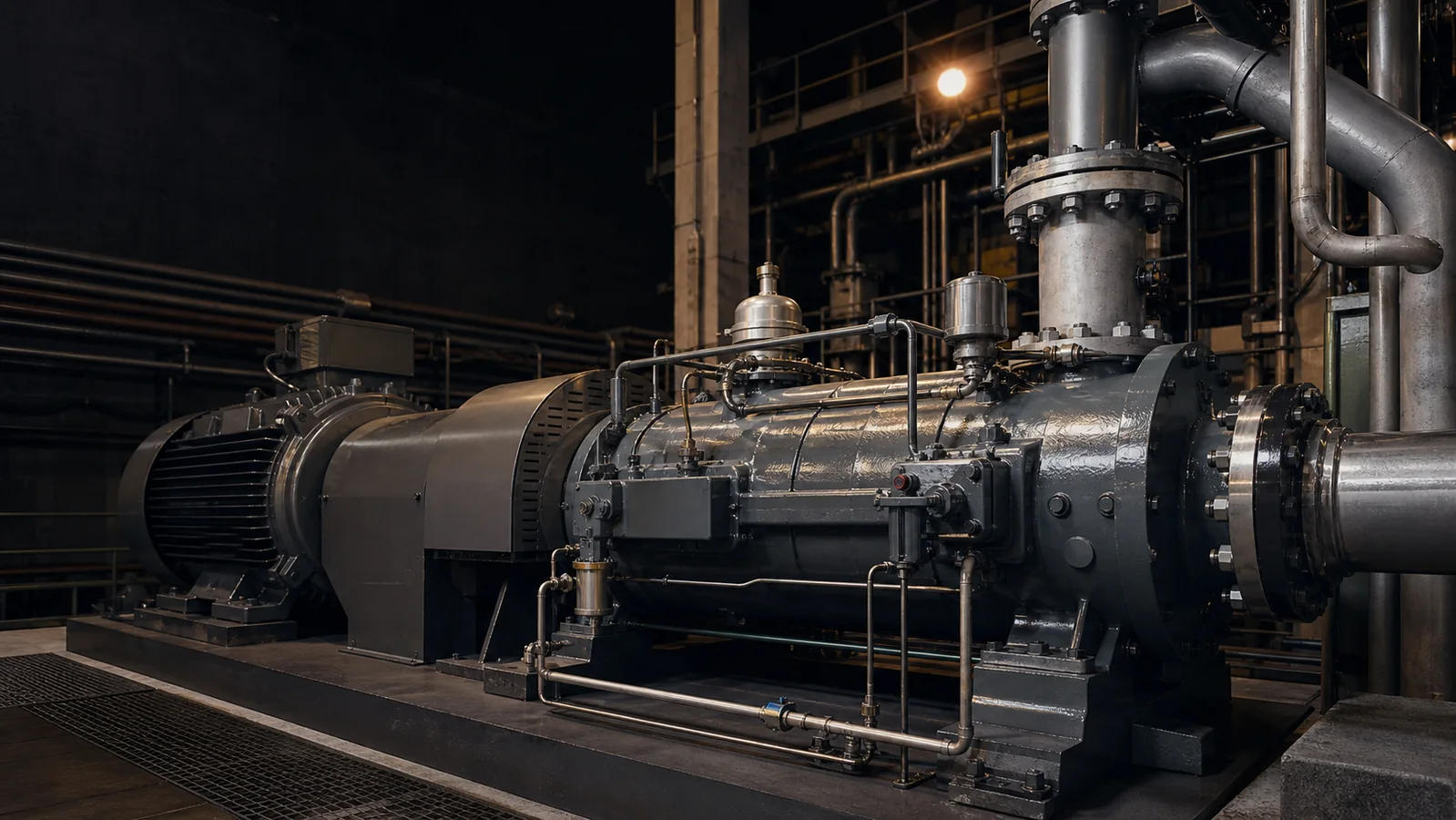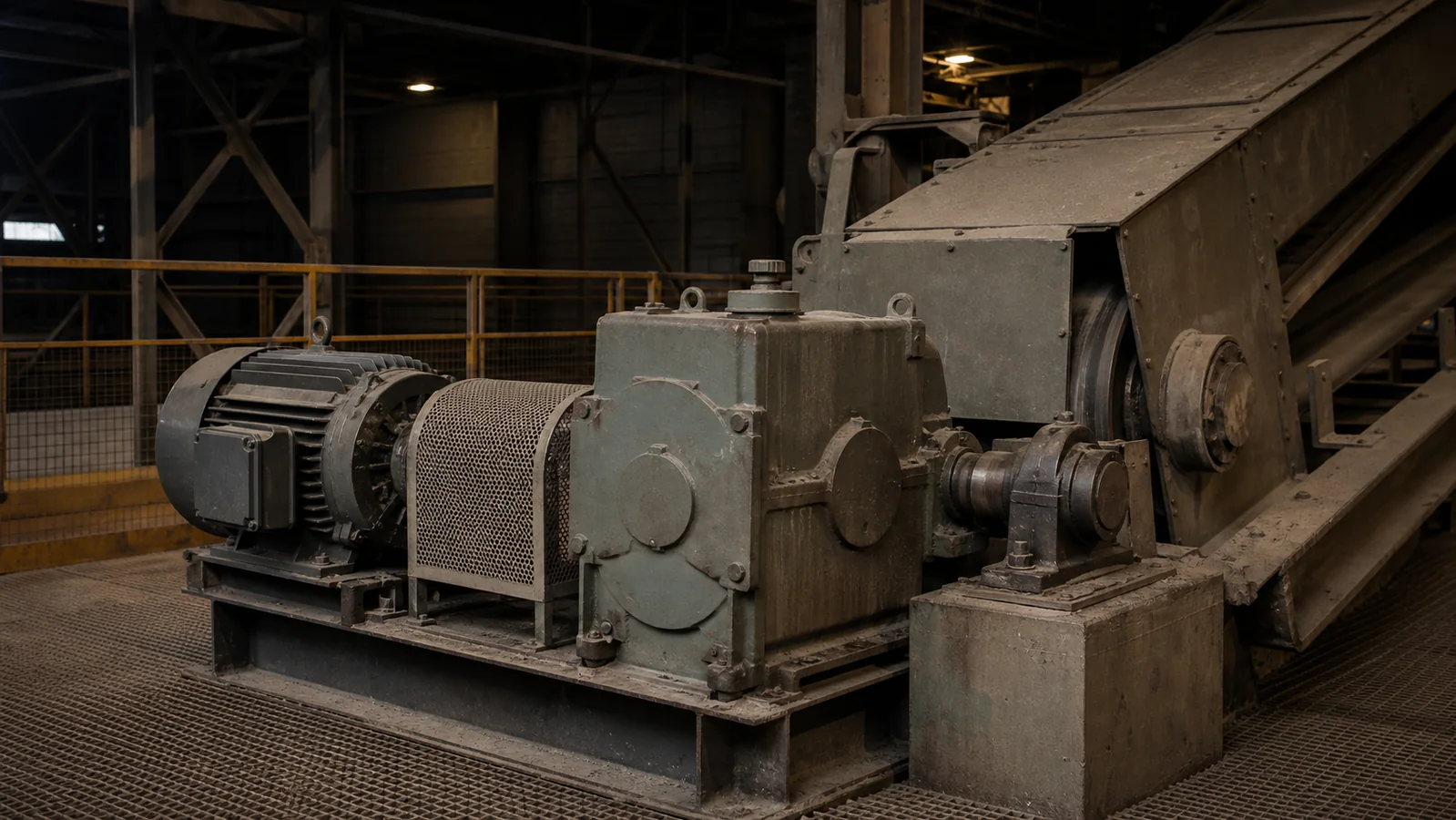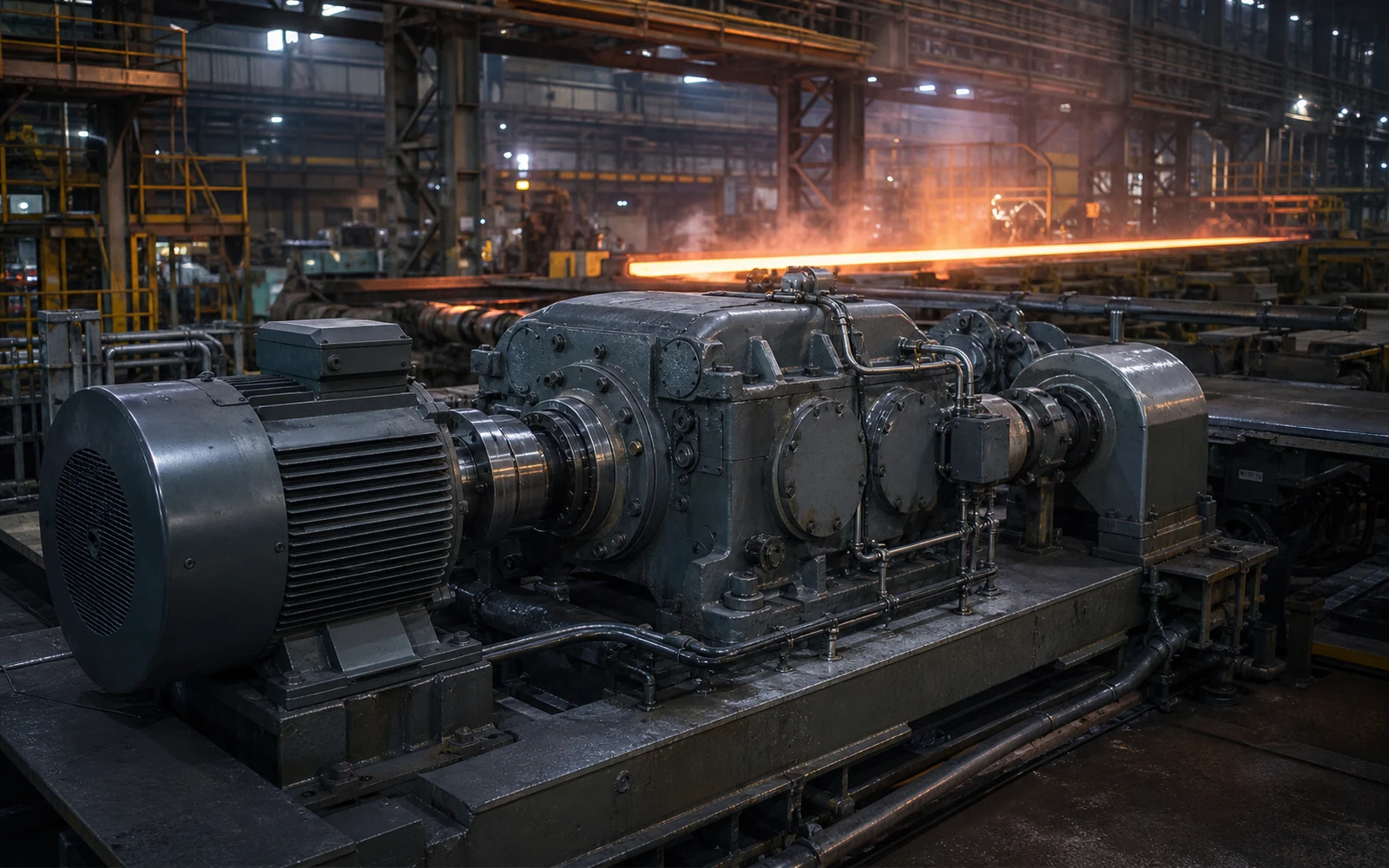
A bearing-frequency family rises at the gearbox input point during steady rolling load. One trend starts the investigation; it does not finish it.
Motor, gearbox and process state share one operating window before each channel is compared with its reference.
Steel · illustrative application
Input-bearing evidence under matched load.
GBX-2 · gearbox input bearingSwipe or use arrow keys to review five evidence channels
- Vibration analysisLocalizes
An outer-race family and its harmonics rise at the input point under matched speed and load.
- IR thermographyCo-locates
The same housing region is warmer than its matched-load reference under a controlled view.
- Ultrasonic monitoringCo-locates
Repeat impacts rise at the same documented point above its local operating baseline.
- Motor current analysisNot supplied
Drive-train torque modulation could not be tested. This absence does not prevent the local bearing review.
- Oil analysisSystem corroboration
Sump iron is rising. It supports a gearbox-system wear hypothesis but cannot identify the bearing or wear mechanism.
Three local channels co-locate at the GBX-2 input bearing. The sump iron trend is consistent with gearbox wear; developing outer-race distress remains the leading hypothesis.
Direct inspection confirmation is not yet available; bearing geometry, sensor setup and lubrication delivery still require field verification.
Repeatable bearing-family growth at matched load and inspection confirmation would strengthen the hypothesis. Loss of repeatability or movement with process state would weaken it.
Verify lubrication and setup, shorten monitoring cadence, and plan inspection by asset criticality.
Assess a similar machine