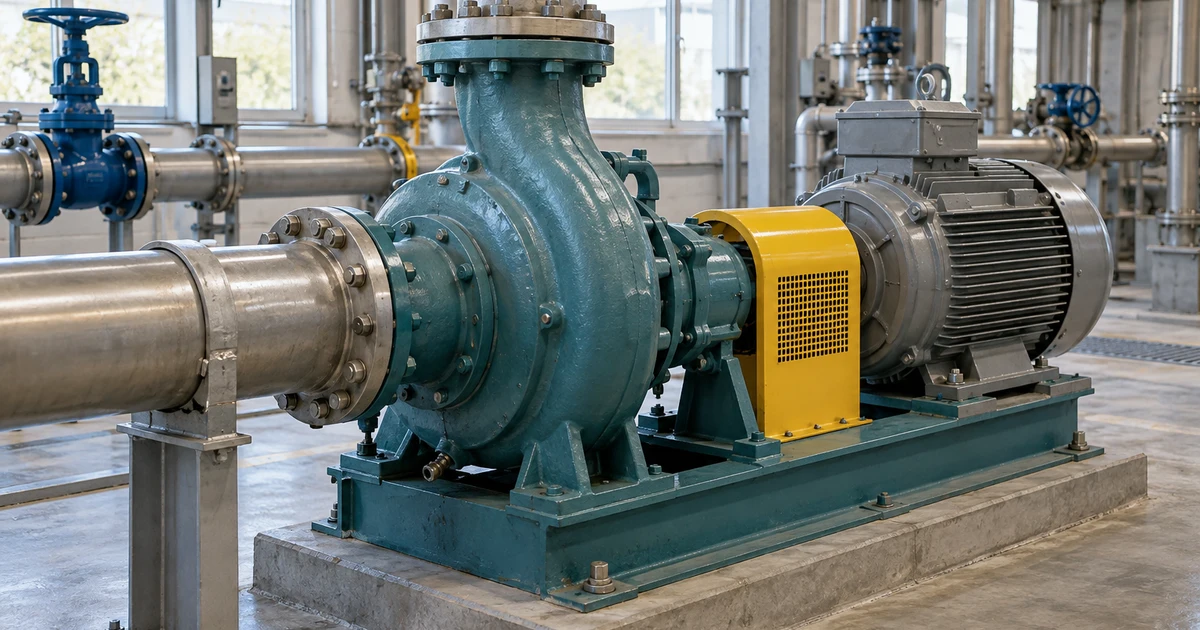

A cooling-water pump sounds rough on the night round. Its bearing-housing vibration is higher than last month's reading. The planner wants a fault name for the work order: bearing wear or cavitation?
First, check what changed. In this fictional example, one of two parallel pumps is out for seal work. The remaining pump is running alone. Comparing today's reading with last month's two-pump baseline may already be misleading.
The bearing deserves investigation. So does the pump's operating point: the flow and head at which it is actually working. A change in duty can alter noise, hydraulic load and vibration without establishing that a bearing has failed. If cooling capacity or protection limits are at risk, escalate the operating issue before continuing the diagnosis.
Put the reading beside the duty
A centrifugal pump operates where its head-flow curve meets the system curve. Changes to valves, strainers, pipework or the number of pumps in service can move that point. KSB's operating-point explanation is a useful reference for this relationship.
In an unchanged system with two identical fixed-speed pumps in parallel, stopping one generally makes the remaining pump deliver more flow than it did as one of the pair. Total system flow may still fall. Variable-speed controls or changed valve positions can alter that outcome, so use measurements and the actual control arrangement rather than assuming it.
The best efficiency point, or BEP, is the flow at which pump efficiency peaks. Moving away from the preferred operating region can increase hydraulic loading and vibration. Low flow can bring recirculation; high flow can make suction conditions more demanding. The direction matters, not simply the size of the vibration increase.
Check the suction evidence, not just the sound
Vapour cavitation occurs when local pressure falls below the liquid's vapour pressure and the resulting bubbles subsequently collapse. A gravel-like noise may fit that explanation, but entrained air, recirculation or a nearby valve can produce confusingly similar observations.
Check suction pressure, coolant temperature, flow and any restriction upstream. In a closed loop, also check the fill-pressure and pressurization records. Compare available net positive suction head, NPSHa, with the pump manufacturer's required value, NPSHR, at the measured duty. Use the site's engineering procedure for this assessment, including pressure reference and measurement location.
NPSHR is not a promise of zero cavitation. The Hydraulic Institute's current guidance distinguishes it from NPSH3, the test value associated with a 3% head reduction. Manufacturer-supplied NPSHR must be at least NPSH3, and the required margin depends on the application. Do not choose a universal safety margin from a blog.
A rising suction-strainer pressure drop is worth checking, but it is not proof of a dirty strainer if flow has also risen. Compare it at a suitable reference condition before concluding that the strainer is loading.
Ask for bearing-specific evidence
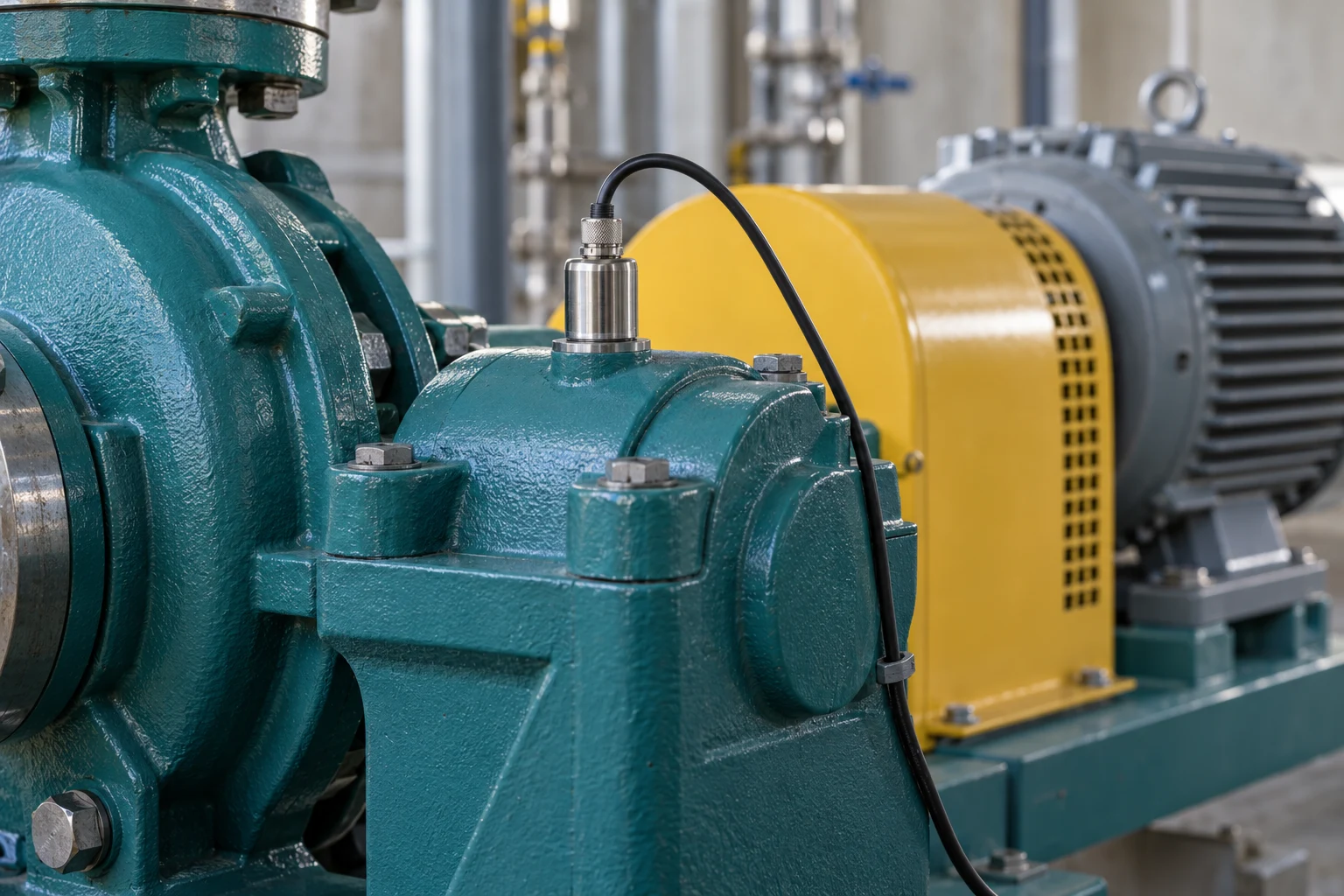
A higher overall vibration value tells you something changed. It does not identify the source. Record the measurement point, direction, sensor mounting, speed and acquisition settings before comparing readings.
For a rolling-element bearing, calculated defect frequencies depend on bearing geometry and shaft speed. An acceleration-envelope spectrum can help reveal repeating impacts that are not obvious in an overall vibration value. Look for a coherent pattern against the correct bearing data, allowing for variation such as slip. SKF's spectrum-analysis guidance describes this approach.
Absence of an obvious peak does not clear the bearing. Sensor location, mounting, background noise and the stage of damage affect what can be detected. Likewise, a warm housing is supporting context, not proof of a lubrication fault. A hot bearing is not a grease instruction explains why temperature needs its own checks.
Use the next check to separate the explanations
Return to the fictional pump. The available evidence is deliberately incomplete: flow per running pump has risen, suction pressure is lower and the bearing-housing vibration is higher. There is no confirmed bearing-frequency pattern yet.
Changed operating point is a reasonable working explanation. Verify flow and differential head against the manufacturer's curve and operating region. If that comparison is inconsistent, investigate the measurement or curve selection before building a diagnosis on it.
A suction-side problem remains plausible. Assess suction margin and investigate air entry or gas release. Higher flow and lower suction pressure can support this direction, but they do not distinguish vapour cavitation from every look-alike.
Bearing damage remains open. Repeat the bearing measurement with a suitable setup and compare operating conditions. A bearing-related pattern that persists at comparable duty would strengthen that hypothesis. A noise reduction after a duty change would support a hydraulic contribution, but would not exclude coexisting bearing damage.
Write the uncertainty into the work order. “Investigate suction conditions and repeat bearing evidence” is more useful than an unsupported “replace bearing”. The investigation should narrow the action, not merely supply a confident-sounding fault name.
Use planned changes as evidence
If the second pump returns to service as part of approved operations, record the before-and-after conditions at the same measurement points. Track what happened to flow, pressure, noise and vibration together. That comparison can be informative without inventing a special test that disrupts cooling.
Do not throttle a critical cooling service or change the pump lineup independently to make a noise disappear. An adjustment can improve one pump's condition while reducing cooling elsewhere. Diagnostic changes belong within site procedures and operating authority.
When the duty keeps shifting, widen the investigation to the loop. In data-centre cooling, Reliability Engine's thermal orchestration overview applies the same need for context to pressure, flow, temperature and service history. The industrial pump lesson remains straightforward: establish how the machine is operating before deciding which part has failed.
References
- KSB: Operating point. Pump and system curve relationship.
- US Department of Energy and Hydraulic Institute: Improving Pumping System Performance, 2006. Pump operating regions, system effects and parallel arrangements.
- Hydraulic Institute: Updates to ANSI/HI 9.6.1, 2025. NPSHR, NPSH3 and application-specific margins.
- SKF: Spectrum Analysis, 2002. Bearing-frequency patterns and acceleration enveloping.