Sensor export
Online oil sensor
- Water activity
- 0.32 aw
- Oil temperature
- 64.2 °C
- Dielectric trend
- +4.1% vs local baseline
Oil analysis
The ConditionCore workflow is designed to accept oil-sensor exports and lab reports, including PDFs, structure the measurements, preserve sample and lubricant context, and relate system-level evidence to local machine signals.
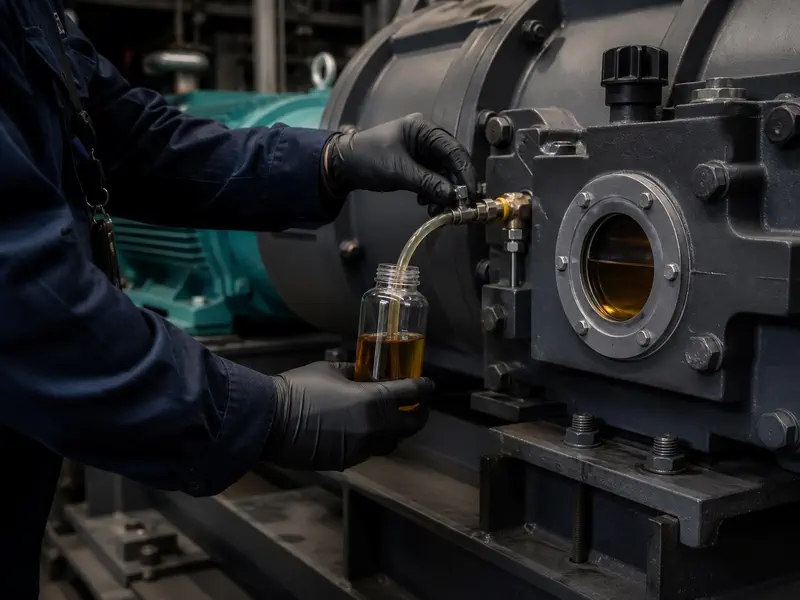
Oil analysis
Keep the sample point, machine hours, laboratory method and units attached before comparing trends.
Illustrative evidence pipeline
Illustrative · not a customer resultEvery parsed result retains its source, unit, sample context and verification state before it contributes to a trend.
Original report, method and units remain traceable.
Machine-linked trend evidence
Higher elemental iron in the sump supports a wear hypothesis in the shared oil system, but does not establish the source or mechanism. Particle-size response depends on the elemental method and sample preparation, so the laboratory method stays attached to the trend.
Data in
Oil analysis commonly provides system-level evidence, and the exact component source may remain unresolved. Particle-size response depends on the elemental method and sample preparation, so keep the laboratory method attached before interpreting a flat or rising metal trend.
What it can reveal
Track comparable wear-metal and ferrous-debris results without assigning a source prematurely.
Relate water, particles and environmental ingress to machine design and operating history.
Trend viscosity, oxidation, acid or base number and other applicable tests.
Use cleanliness and particle information with sampling method and filtration context.
Normalize units, methods and lab formats so comparable results remain traceable.
Test whether system-level oil evidence is consistent with locally observed machine change.
How ConditionCore uses it
Wear metals, contamination, viscosity and lubricant degradation. This is system evidence that may not localize the source.
Begin with an available sensor export or laboratory report, including PDF formats.
Structure tables and values, normalize units and flag uncertain fields for review.
Map the sample to its asset, lubricant, operating hours and comparable test history.
Relate system-level wear or contamination to local vibration, thermal and ultrasonic evidence.
Common questions
See the controls required for a trustworthy comparison.
A review can begin with an oil-analysis PDF. Report values and tables must remain linked to the original document and be verified before they are used in an assessment.
Supported sensor exports can be mapped to the same asset and timeline as laboratory samples, with source and method retained. The first review confirms the available format and transfer route.
Usually not by itself. A shared sump can show rising iron-bearing material or contamination while remaining unable to localize the source or mechanism. Local vibration, thermal or ultrasonic evidence helps narrow the hypothesis.
First machine review
Share one changing asset and the files you already have. We will confirm what is usable, what remains uncertain and which next check is most valuable.
Request a machine review