Fixed contact sensor
- Point
- GBX-2 input-bearing stud · fixed mount
- Setup
- 30 to 50 kHz band · 2 s sample
- Reference
- Source-specific reference · steady load · 14 days
Continuous change against the fixed-sensor baseline
Ultrasonic monitoring
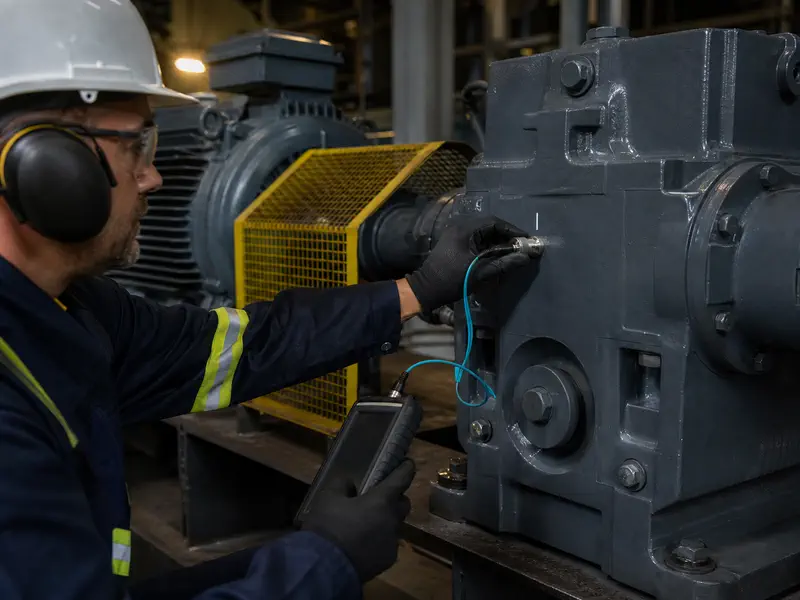
ConditionCore accepts readings from fixed ultrasonic sensors or handheld instruments, preserves the instrument, point, mounting or coupling method, frequency band, gain, filter, duration and operating state, then trends change against the correct reference.
Ultrasonic monitoring
Keep the contact point, instrument settings and operating state attached to every comparison.
Illustrative acquisition paths
Illustrative · not a customer resultFixed and handheld readings can share a machine timeline without pretending their absolute levels are interchangeable.
Continuous change against the fixed-sensor baseline
Route reading compared with its own instrument history
Machine-linked evidence
Directional agreement can strengthen the case for follow-up. Absolute dB values remain tied to their instrument, gain, filter and contact method.
Data in
Ultrasonic levels are instrument- and setup-dependent. Trends are comparable only when the instrument, gain, filter, method and location are controlled.
What it can reveal
Track high-frequency energy at a fixed point using a consistent acquisition setup.
Observe response to a controlled lubrication action without relying on level alone.
Test demodulated impacts against configured bearing frequencies and machine speed.
Locate airborne ultrasonic sources and retain inspection context where applicable.
Support targeted inspection of traps and valves using an appropriate procedure.
Surface patterns for qualified electrical inspection when the instrument and use case permit.
How ConditionCore uses it
Early friction, repeat impacts, lubrication response and leaks, trended with one controlled acquisition setup.
Accept a fixed-sensor stream or a documented handheld inspection reading.
Retain instrument, gain, filter, contact method and point location.
Compare the same setup and operating state against its local reference.
Relate friction or impact change to vibration, thermal and lubrication evidence.
Common questions
See the controls required for a trustworthy comparison.
It can reveal high-frequency change associated with friction, lubrication condition, repetitive impacts and, in suitable applications, leaks or electrical discharge.
Yes. ConditionCore can retain fixed-sensor streams and documented handheld readings, including their different acquisition settings and references.
Use the same measurement point, instrument or calibrated reference, gain, filter, method and sufficiently similar operating state. A dB value without that context is easy to misread.
First machine review
Share one changing asset and the files you already have. We will confirm what is usable, what remains uncertain and which next check is most valuable.
Request a machine review